

KPK Fails to Tackle Corruption and Its Efforts to Raise Anti-Corruption Awareness in Indonesia
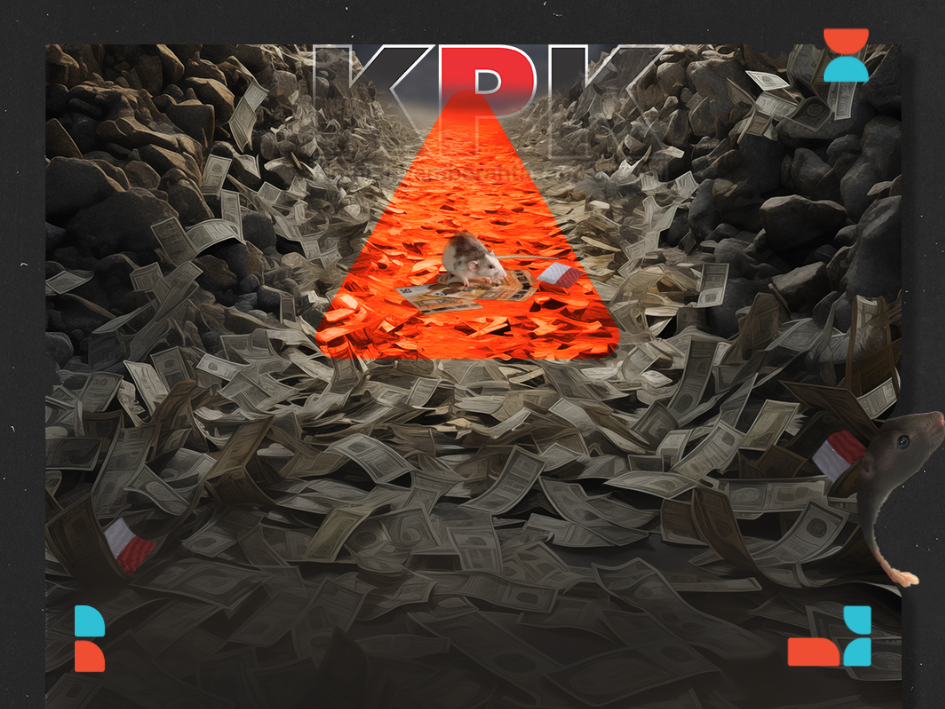
The leadership of Indonesia’s Corruption Eradication Commission (KPK) recently acknowledged its failure to curb corruption in a working session with the House of Representatives Commission III (Tempo, 2024). According to a statement by the Presidential Staff Office (KSP), Indonesia’s 2023 Corruption Perception Index (CPI) has stagnated at a score of 34, placing the country at 115 out of 180 nations in 2024.
The Director of the National Anti-Corruption Strategy Team (Stranas) explained that the CPI serves as a critical reference for evaluating government policy in combating corruption systematically in Indonesia. Corruption, which continues to pose a significant threat, often starts with bribery in public services and licensing, issues of insufficient integrity among bureaucratic and law enforcement officials, and “money politics” that lead to high political costs and weakened democratic quality, along with other corruption forms.
Despite admitting its shortcomings, KPK remains committed to efforts aimed at reducing corruption prevalence. Its strategic anti-corruption plan includes three primary approaches: education, prevention, and enforcement.
KPK’s Preventive Steps Against Corruption
One of the systematic efforts taken by the Corruption Eradication Commission (KPK) as Indonesia’s primary anti-corruption and prevention agency is the development of the Anti-Corruption Education Guide (PAK). The main objective of this project is to embed anti-corruption education within the smallest educational units, such as schools and universities.
To bring about systemic change, KPK has been formulating the National Anti-Corruption Education Strategy (PAK) since 2022. According to its timeline, KPK plans to implement anti-corruption education on a wide scale in 2024. To ensure effective implementation, in 2023, KPK conducted a pilot project as a trial run before broader deployment. This project involved sampling in various regions representative of Indonesia’s demographics to test the initiative on a smaller scale and build trust among those impacted by KPK’s efforts.
From Maxima’s perspective, KPK’s initiative aligns with the second phase of the Maxima Impact Framework, known as Accountable Impact. As detailed in a previous article, the Maxima Impact Framework consists of four phases: Intentional Impact, Accountable Impact, Scalable Impact, and Systemic Impact. In the Accountable Impact phase, organizations typically focus on measurable pilot projects or quick wins. These initiatives are designed to ensure scalability when programs are implemented on a larger scale.
Read also: Keys to Success for the Ministry of Finance’s Transformation Ambassador
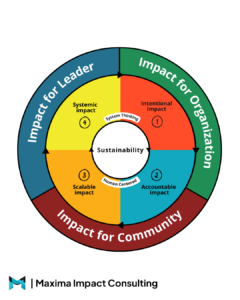
Impact Framework & Approach Maxima Impact
The KPK has implemented the Anti-Corruption Education (PAK) initiative concretely through the development of the PAK Guidebook. This guidebook has been specifically tailored for three different educational categories: PAK for Civil Servants (ASN), PAK for Higher Education (Dikti), and PAK for Kindergarten, Elementary & Junior High School (Pauddasmen). To ensure the effectiveness of the guidebook for each educational level, KPK conducted a pilot project as an initial step. This trial phase aimed to evaluate and refine the guide before its rollout as a national resource across all regions in Indonesia.
Anti-Corruption Education Strategy
The Anti-Corruption Education Pilot Project (PAK) includes four major stages:
Preparation
Establishing relationships with potential stakeholders in piloting areas and selecting key PAK actors across educational levels.
Dissemination
KPK distributed the PAK guide and held workshops to strengthen capacities among key actors. Each actor developed an action plan for implementation within their respective education units. This phase included readability testing of the PAK guide to assess its effectiveness.
Implementation
With guidance, each educational unit began implementing the PAK guide. Monitoring and evaluation processes measured the guide’s effectiveness in anti-corruption education.
Improvement
Data collected from monitoring and evaluating the pilot implementation provided insights to refine the PAK guide for broader implementation in the coming years.
The pilot was conducted across three representative regions: Lampung, West Java, and Southwest Papua, involving key PAK actors from various education levels:
- Civil Servants (ASN): Represented by training centers and trainers.
- Higher Education: Represented by university rectors and lecturers.
- Kindergarten, Elementary & Junior High School (Pauddasmen): Represented by principals and teachers across multiple educational institutions.
Additionally, national entities participated as key actors in the PAK pilot project, including the National Accreditation Board for Higher Education and Early Childhood Education (BAN), as well as instructors from the State Administration Agency (LAN).
In the Maxima Impact Framework, a critical element of the second phase (Accountable Impact) is the importance of measuring change initiatives initiated by an organization. These measurements must rely on clear, quantifiable indicators to discern which initiatives contribute effectively to the intended changes. In developing the PAK guidebook, KPK established various indicators to ensure the guidebook’s readability, including comprehension of language and terminology, as well as the effectiveness of the guide’s implementation, measured through monitoring and evaluation.
Referring back to the Maxima Impact Framework, conducting a pilot project serves as a strategic step toward advancing a change initiative into the next phase, Scalable Impact. In the Accountable Impact phase, the limited scope of a pilot project minimizes resource expenditure while still enabling assessment of the initiative’s effectiveness. This was KPK’s approach in implementing the PAK guidebook pilot across three regions instead of launching it nationwide immediately. Furthermore, the results of the pilot project have had a positive impact on KPK, helping to identify areas for improvement for more effective implementation. Additionally, stakeholders involved in the pilot could experience the initiative firsthand, fostering greater trust and optimism about the anticipated changes.
Results of KPK’s PAK Pilot Project
The urgency of conducting a pilot project before broad implementation is further validated by Ismail, Kinchin, and Edwards (2017), who assert that a well-executed pilot project is characterized by clear goals and objectives. When an organization can clearly define its goals and objectives, it ensures the validity and detail of the methods to be applied. This aligns with KPK’s approach, as it has identified specific goals through clear stages, leading to a focused pilot project that allowed for effective evaluation of the PAK guidebook’s utility.
Additionally, Kuhn George (2023) notes that a pilot project can help an organization verify its approach, goals, and methods by aligning them with its set objectives. This approach aids organizations in efficiently investing time and resources. KPK has exemplified this by involving representatives from various regions and national entities, allowing for eventual implementation across all regions and organizational bodies in Indonesia.
Currently, the PAK guidebook has entered the stage of mass distribution to educational units throughout Indonesia. The lessons and feedback from the pilot project phase have proven valuable in assessing the guidebook’s effectiveness across various educational settings.
Looking to create impactful initiatives through Community Activation? Let’s discuss with us!